
Every Step Tells A Story
Every Step Tells A Story
Classic South India
Your Journey Begins the Moment You Land
Arriving in an unfamiliar country can feel stressful. This is especially true when English or Arabic is not your first language. We remove that stress for you completely.
Our private expediter meets you inside Cairo International Airport. This person is waiting for you before you even reach passport control. You are guided through every step with ease. Your luggage is handled for you. Your transfer is private and comfortable. You are driven directly to your hotel.
You never wait in a long taxi line. You never search for a driver holding a sign with your name. From your very first minute in Egypt, you are cared for.

A 15 Day Journey: Temples, Backwaters and Coastlines
South India rewards the traveller who slows down and looks closely, and this fifteen-day route through Tamil Nadu and Kerala is built around that idea. The journey moves from Chennai’s temple towns through French colonial streets, wildlife reserves and quiet backwaters, to a palm-lined coast at Cochin. Below is a day-by-day look at how it unfolds.
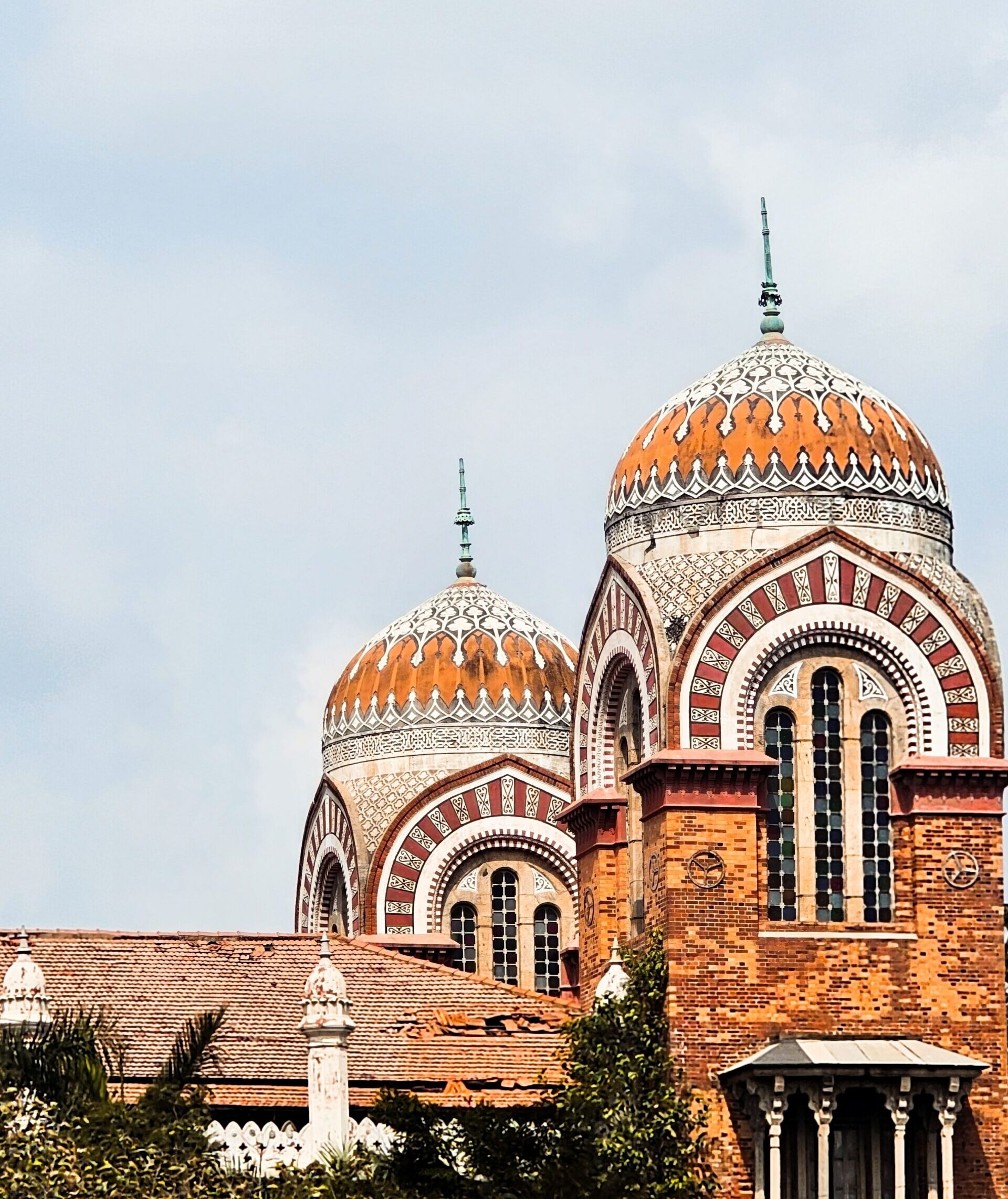
Majestic architecture of Madras University displaying Indian historical design
Day 1: Arrive Chennai
The journey opens with a warm welcome at Chennai Airport, complete with fresh floral garlands, followed by check-in at the hotel. Chennai, once known as Madras, has quietly kept South India’s artistic, religious and culinary traditions alive for centuries. Fort St. George offers a direct link to the British East India Company and the earliest days of colonial rule in the south.
The Government Museum, established in 1851, holds one of the richest collections of art and archaeology in the country. Kapaleeswarar Temple in Mylapore draws devotees to Lord Shiva in his self-manifested form. Marina Beach closes out the day with twelve kilometres of turquoise water, one of the widest urban beaches in the world.
Day 2: Chennai – Kanchipuram – Mahabalipuram
An early breakfast is followed by the road to Mahabalipuram, with a stop in Kanchipuram, once capital of the Pallava dynasty and still known as the City of Temples. Ekambareswarar Temple, one of the five Pancha Bhoota Stalams, represents the element of earth. Kamakshi Amman Temple honours the goddess believed to be an incarnation of Parvati, while Kailasanathar, Varadharaja Perumal and Vaikuntha Perumal temples add further chapters of Pallava and Vishnu worship. Kanchipuram is equally famous for its handwoven silk, still produced by thousands of families on traditional looms. The drive continues to Mahabalipuram, once the great seaport of the Pallava kingdom, for check-in and overnight.
Day 2 — The Great Pyramids of Giza and the Egyptian Museum
After a relaxing breakfast, your private guide takes you to the Giza Plateau. This is home to one of the Seven Wonders of the Ancient World. You stand before the Great Pyramids of Cheops, Chefren, and Mykerinus. You also see the famous Sphinx and the Valley Temple. You enjoy lunch at a local restaurant. In the afternoon, your guide takes you to the world-famous Egyptian Museum. This museum was designed by French architect Marcel Dourgnon in an elegant neo-classical style. Inside, over 120,000 treasures are on display. These span from the predynastic era through the Pharaonic age to the Greco-Roman period. Afterward, you return to your hotel for a comfortable overnight stay.
Day 3: Mahabalipuram – Pondicherry
The morning covers the sights of Mahabalipuram. The Five Rathas, carved entirely from single rocks, stayed buried in sand for centuries before the British uncovered them. The Shore Temple stands right at the water’s edge, a monument to Pallava ambition, while Arjuna’s Penance, a giant relief carved across two boulders, ranks among India’s most important ancient artworks. From there the route heads to Pondicherry, shaped by French colonial rule that lasted until 1954, where the older French Quarter is known for its quiet, bougainvillea-lined streets. Check-in and overnight follow.
Day 4: Pondicherry
A full day is set aside for Pondicherry, starting with a visit to Auroville, the experimental township founded in 1968 around peace and shared living. Sightseeing continues at the Sri Manakula Vinayagar Temple, a centuries-old shrine to Ganesh known for its painted friezes and resident temple elephant. A walk through the French Quarter follows, taking in streets such as Rue Dumas and Rue Romain Rolland. Overnight stay remains in Pondicherry.
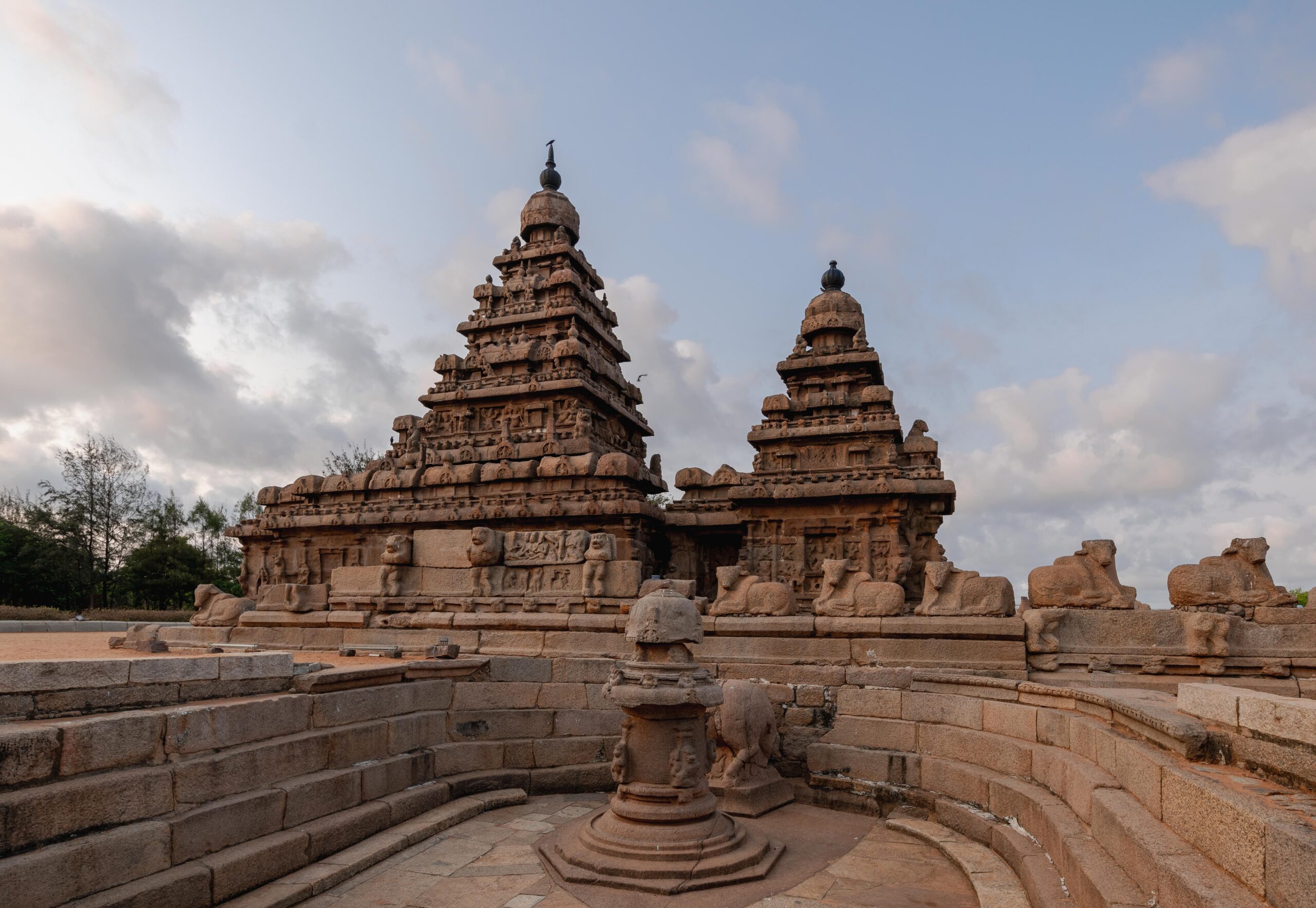
Shore Temple in Mahabalipuram, India
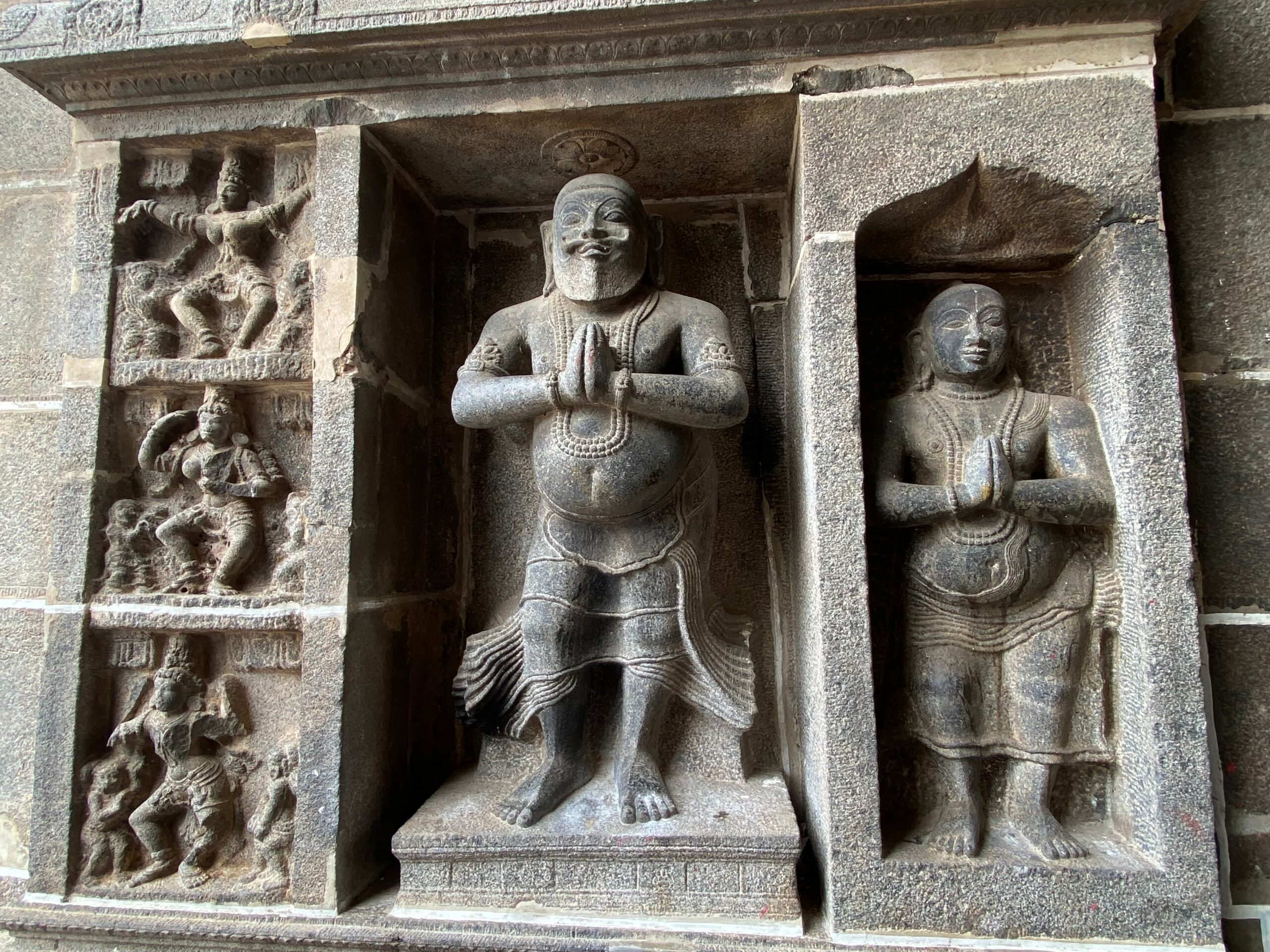
Stone Sculptures in Chidambaram Temple
Day 5: Pondicherry – Chidambaram – Kumbakonam
The drive to Kumbakonam passes three sites central to Chola architecture. Nataraja Temple in Chidambaram honours Shiva in his cosmic dancing form, while Gangaikonda Cholapuram, with a tower rising fifty-five metres, and Airavatesvara Temple in Darasuram, built in the twelfth century, complete the trio known as the Great Living Chola Temples, all carrying UNESCO World Heritage status. Kumbakonam itself dates to the third century and still marks the Mahamaham festival once every twelve years. Check-in and overnight follow on arrival.
Day 6: Kumbakonam – Thanjavur – Madurai
The road to Madurai includes a stop in Thanjavur, capital of the Chola empire at its height, where the royal palace mixes ruin and renovation, built partly by the Nayaks after 1535 and partly by a later Maratha dynasty. Brihadeeshwar Temple dominates the town with a vimana rising sixty-six metres, one of the tallest temple towers on earth. From there the journey continues to Madurai, a city that traded with ancient Rome long before Chennai existed, for check-in and overnight.
Day 7: Madurai
A full day in Madurai centres on Meenakshi Amman Temple, one of South India’s most revered sites, alongside Thirumalai Nayakkar Mahal, the pillared palace of King Tirumala, the Gandhi Memorial Museum, and Vandiyur Mariamman Teppakulam, the Great Tank.
A tuk-tuk ride through the bustling streets leads to the evening aarti at Meenakshi Amman Temple, where chanting and lamplight create a spiritual close to the day.
Day 8: Madurai – Thekkady
The route turns toward Kerala and the hill town of Thekkady, set within the Periyar forests, one of India’s finest wildlife reserves. On arrival, the day includes a visit to a spice plantation and a shared boat ride on the Periyar Tiger Reserve.
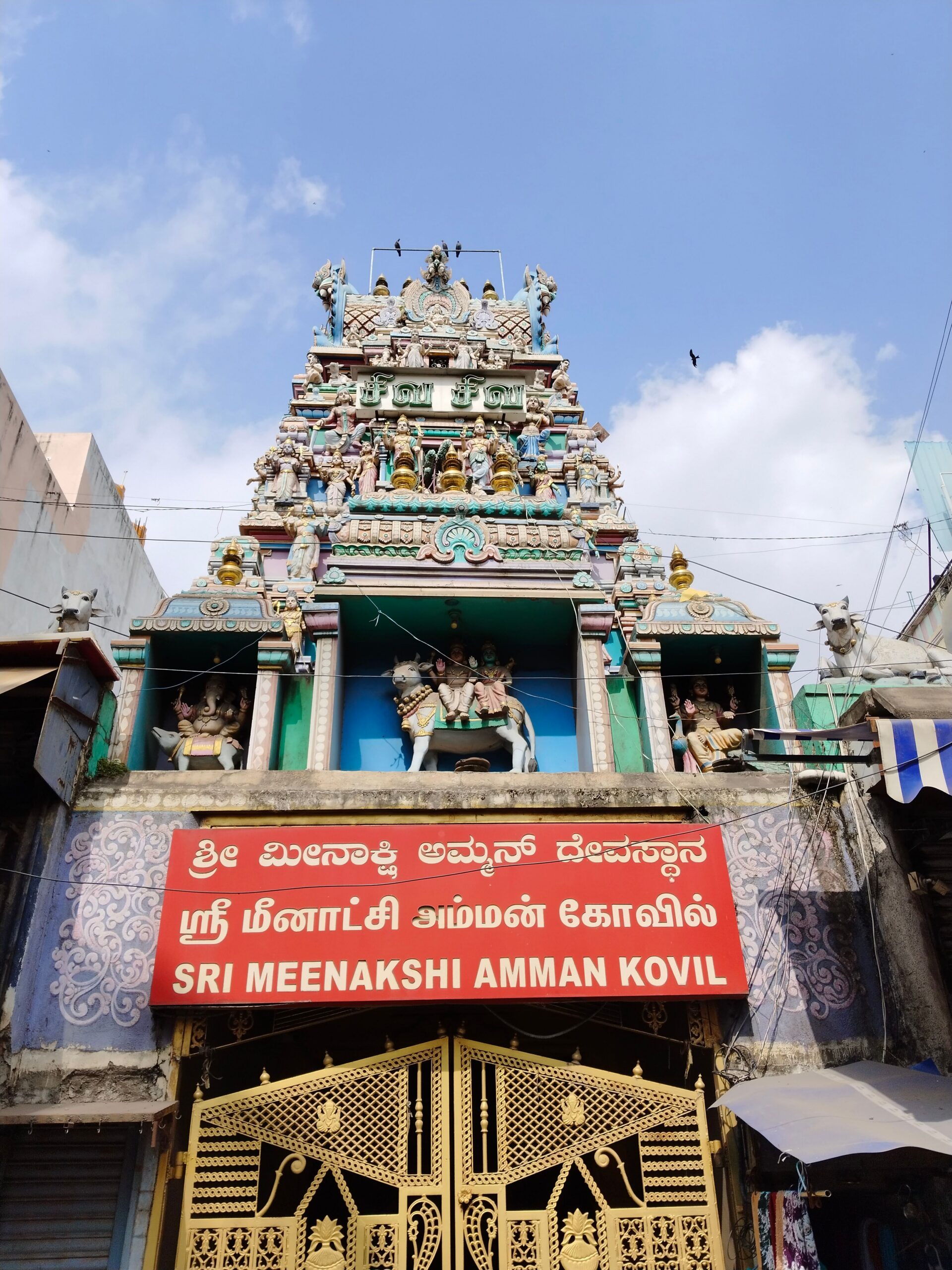
Sri Meenakshi Amman Temple with intricate sculptures in Madurai
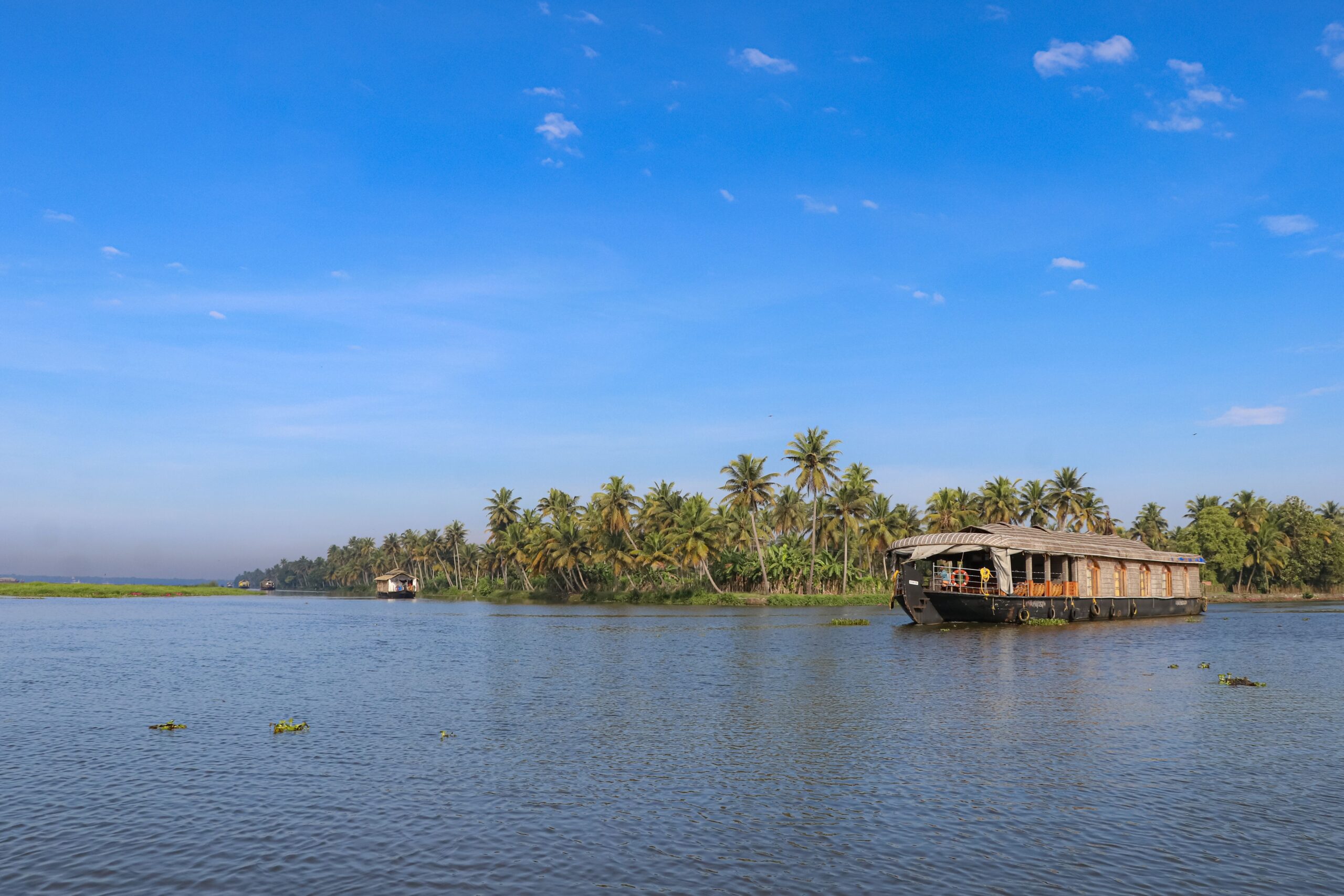
Houseboat on serene backwaters by lush greenery in Kumarakom, Kerala.
Day 9: Thekkady – Kumarakom
A spice tour through the plantations of the Western Ghats precedes a boat ride on Lake Periyar, where elephants, bison and water birds are often visible from close range, followed in the evening by a Kalaripayattu performance of Kerala’s ancient martial art. The drive to Kumarakom follows, a cluster of small islands on Vembanad Lake known for its bird sanctuary and migratory visitors like the Siberian stork. On arrival, a village-life experience shows how local communities farm paddy fields, tap toddy and weave coconut palm for thatched roofing.
Day 10: Kumarakom – Alleppey
The drive continues to Alleppey, once known as the Venice of the East for its place in Kerala’s maritime history, now known for boat races, backwaters and the coir industry. The highlight of the day is boarding a traditional houseboat, a modern version of the old kettuvallam boats once used to carry rice and spices. Lunch, snacks and dinner are all served onboard, with the night spent sailing through the backwaters.
Day 11: Alleppey – Marari
Breakfast is served onboard before disembarking for the drive to Marari, a quiet coastal village named after Mararikulam, a traditional fishing settlement where local life still revolves around the sea. Unlike the busier beaches near Kochi, Marari keeps its rustic character, with fishermen heading out at dawn. The rest of the day is free for leisure, with overnight at the beach resort.
Day 12: Marari
A full day is left open in Marari, giving space to rest after the pace of the temple towns. Ayurvedic wellness practices and fresh seafood are both part of the local culture here, and the overnight stay remains at the beach resort.
Day 13: Marari – Cochin
The drive to Cochin covers a city shaped by more than six hundred years of traders and explorers, its estuary setting home to giant Chinese fishing nets, a four-hundred-and-fifty-year-old synagogue, and Portuguese and Dutch colonial-era houses alongside remains of the British Raj. Check-in and overnight follow on arrival.
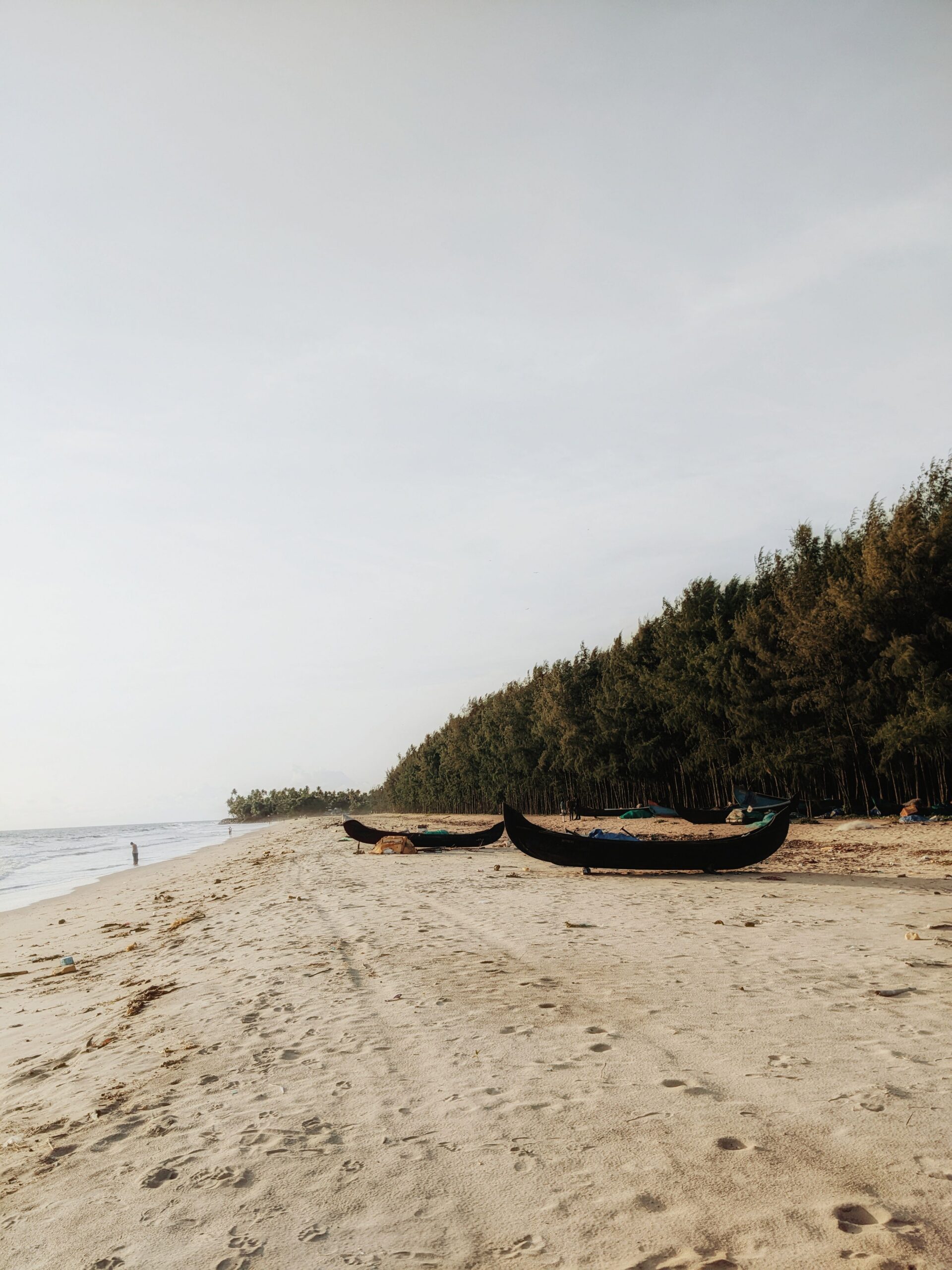
Mararikulam Beach
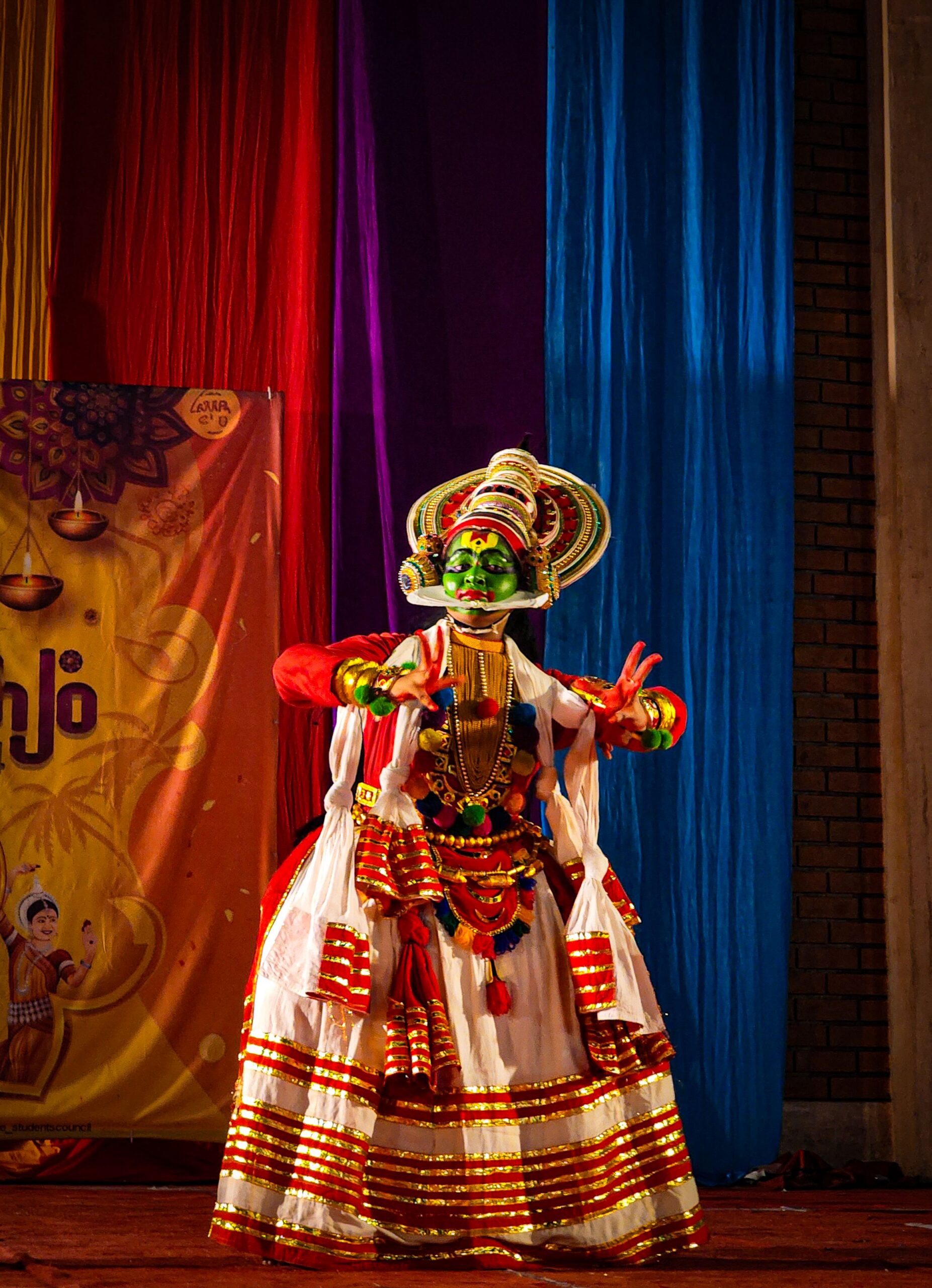
Kathakali Dancer Performing Traditional Indian Dance
Day 14: Cochin
A full day begins in Fort Kochi with the famous Chinese fishing nets, a hallmark image on every postcard of the city, and St. Francis CSI Church, the oldest European church in India, built in 1503, where Vasco da Gama was originally buried. A tuk-tuk ride continues past the Dhobi Khana laundry station, through Mattancherry, to the fruit market on Palace Road and a spice market thick with ginger, cardamom and pepper. In the evening, a Kathakali performance brings the epics of the Mahabharata and Ramayana to life through elaborate costume and expression.
Day 15: Departure
The final morning allows for breakfast, subject to flight timings, before the transfer to the airport for the journey home or onward.
Why This Route Works
What makes this itinerary work is its sense of progression. Nothing feels repeated, even when the theme is temples, because each town carries its own dynasty, its own deity and its own architectural signature. The shift from stone temples to spice forests to open water gives the trip a natural rhythm, alternating between structured sightseeing and unstructured rest. For travellers drawn to South India’s blend of living tradition and quiet coastline, this fifteen-day route offers a complete and well-paced introduction, with Active Traveller handling the details so the focus stays on the experience itself.