
Every Step Tells A Story
Every Step Tells A Story
Eleven Days Across Uzbekistan
A Family Journey Along the Silk Road
Uzbekistan does not announce itself the way more familiar destinations do. There is no single postcard image that sums it up, no easy shorthand. Instead, the country reveals itself gradually, city by city, through blue-tiled minarets rising out of clay-walled fortresses, through the smell of fresh bread baked in a tandoor oven, through mountains that appear, almost without warning, on the edge of a capital city otherwise defined by wide boulevards and Soviet-era metro stations. An eleven-day, ten-night family itinerary through Khiva, Bukhara, Samarkand, and Tashkent offers exactly this kind of gradual unfolding: four cities, each distinct in character, connected by desert highways, a high-speed train, and a shared thread of hospitality that has defined this stretch of the Silk Road for over a thousand years.
Trip Overview
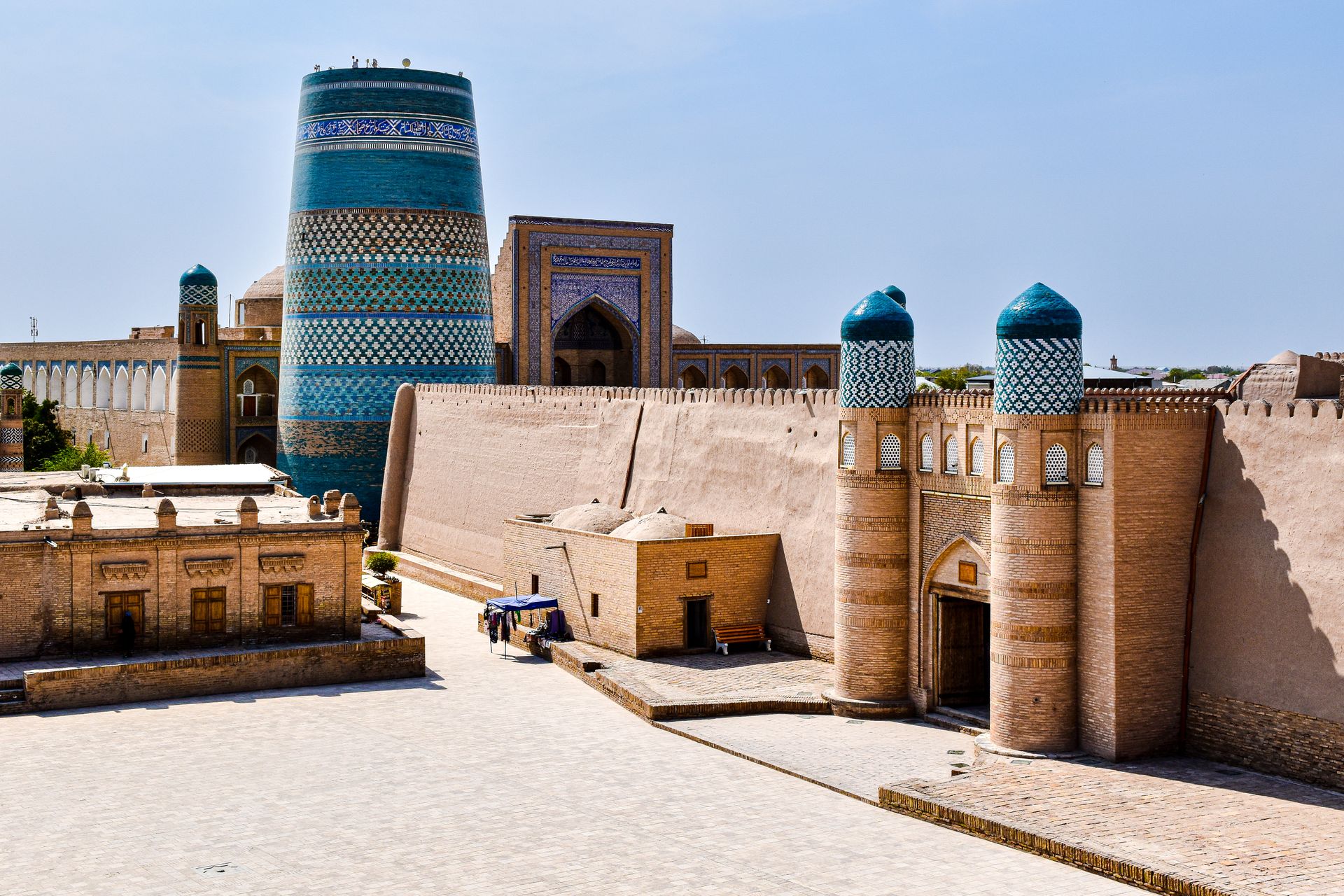
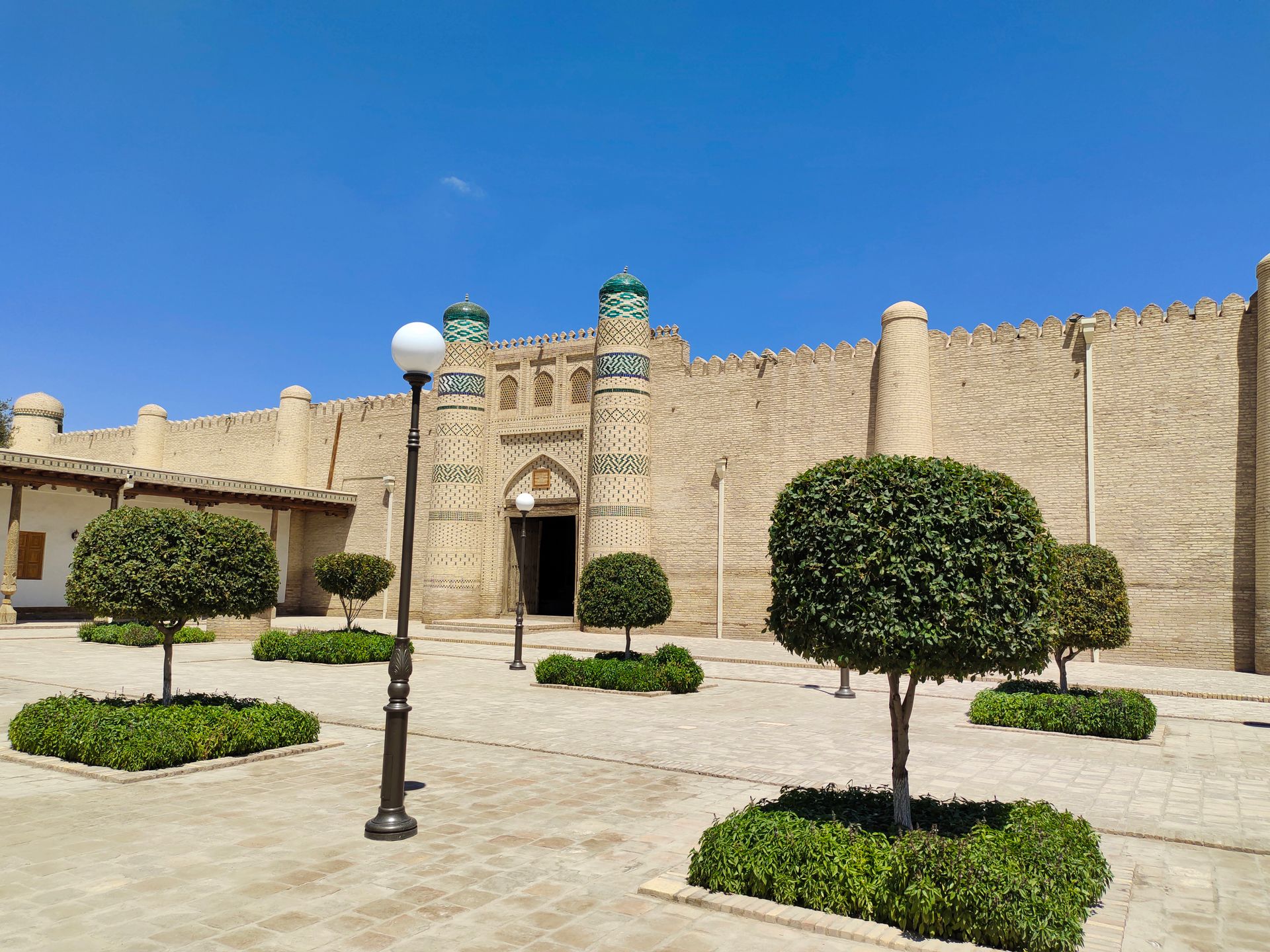
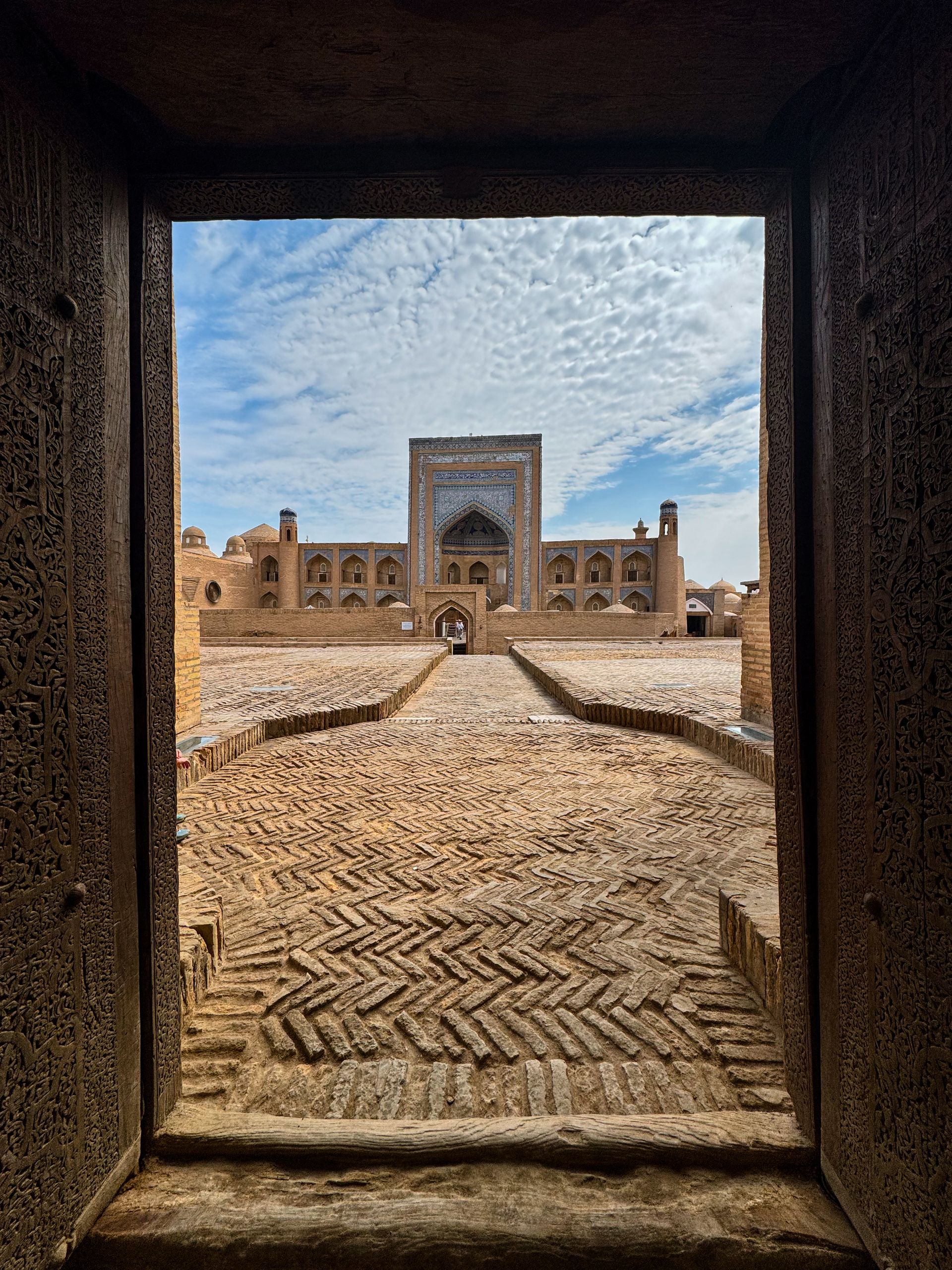
The trip begins, fittingly, in the most otherworldly of the four cities. Khiva’s old town, known as Ichan-Kala, is a walled museum-city where visitors sleep, eat, and wander inside the same mud-brick ramparts that once protected caravans crossing the Kyzylkum Desert. After an arrival at Urgench International Airport and a short transfer, the first afternoon is given over to a private walking tour through Ichan-Kala’s narrow, stone-paved lanes. The geometric tilework of the Juma Mosque, the imposing Kunya Ark citadel, the strikingly squat and unfinished Kalta Minor minaret, and the ornate Mohammed Amin Khan Madrassah all sit within easy walking distance of one another, making Khiva an ideal, low-fatigue introduction to Uzbekistan for children and grandparents alike.
The final leg heads to Tashkent, Uzbekistan’s modern capital, known for its ornately decorated metro stations and bustling Chorsu Bazaar, before the journey concludes with a departure from Tashkent International Airport.
Each day of the itinerary is paired with a signature colour, a nod to the shifting palette of tilework, desert stone, and mountain light travellers encounter as they move from city to city. What follows is a day-by-day look at the full experience
Summary
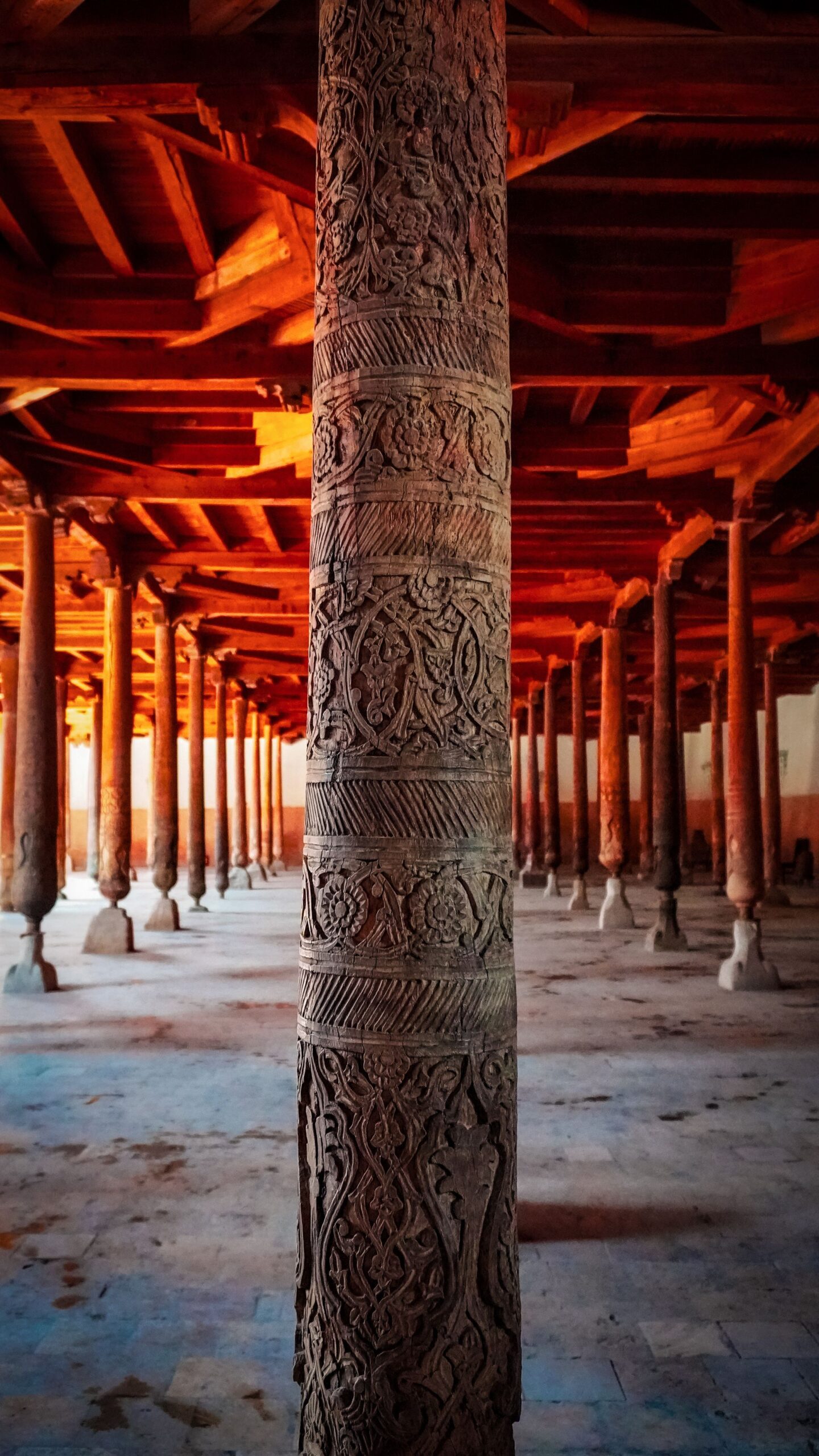
The second day slows the pace further and turns hands-on. A visit to a workshop of hereditary woodcarvers introduces the family to the patterned elm columns that appear throughout the old town’s madrassahs and homes; children can try simple stamping techniques while adults are invited to pick up a chisel under a master’s supervision.
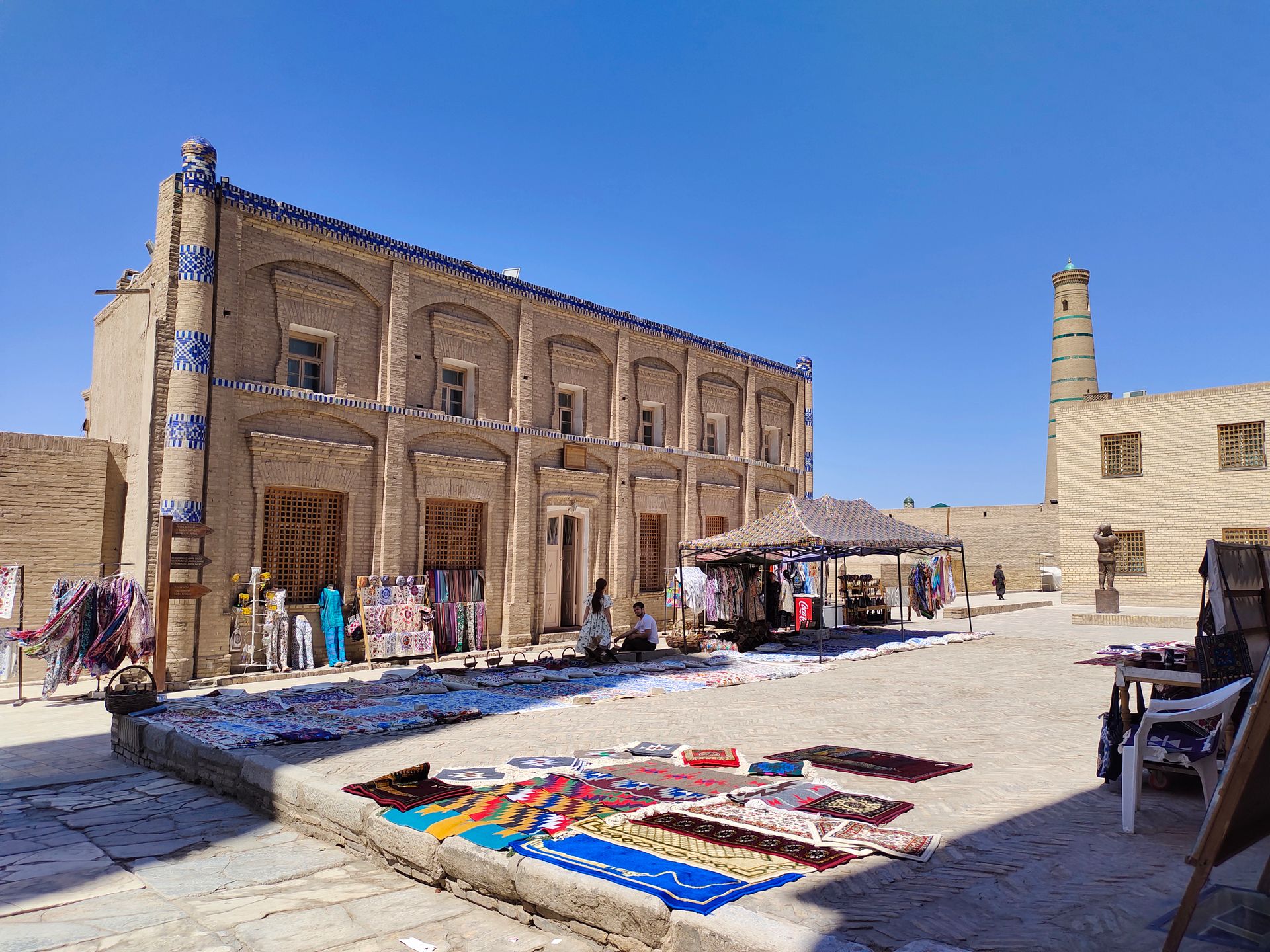
The rest of the day is left loose by design, with time to browse for handmade camel-wool textiles or simply sit in the shade of the fortress walls. The day closes on the high terrace of Ak-Sheikh-Bobo, where the low sun turns the mud-brick roofs and majolica domes gold, and where a curious detail about the city becomes visible up close: the doorways of old family homes were built deliberately short, so that any visitor would have to bow slightly on entering — a small architectural lesson in hospitality that still colors the way Khiva welcomes guests today.
Crossing the Desert to Bukhara
Day three is a travel day, but not a wasted one. The drive from Khiva to Bukhara cuts directly across the Kyzylkum Desert, one of Central Asia’s great sand seas, with a lunch stop at a roadside café breaking up the journey before arrival in Bukhara by late afternoon.
Bukhara has a different texture than Khiva — less a single sealed fortress, more a living city where medieval monuments sit alongside working bazaars and modern life continues around them. The first evening is spent strolling the Lyabi-Hauz Ensemble, an ancient pool ringed by centuries-old mulberry trees, followed by dinner at the water’s edge.
Bukhara earns three full nights, and the itinerary uses them well. A guided walk through the city’s holy quarter takes in the Po-i-Kalyan Complex, anchored by the towering Kalyan Minaret and the sprawling Kalyan Mosque, before continuing to the Ark Fortress, the former winter residence of Bukhara’s emirs.
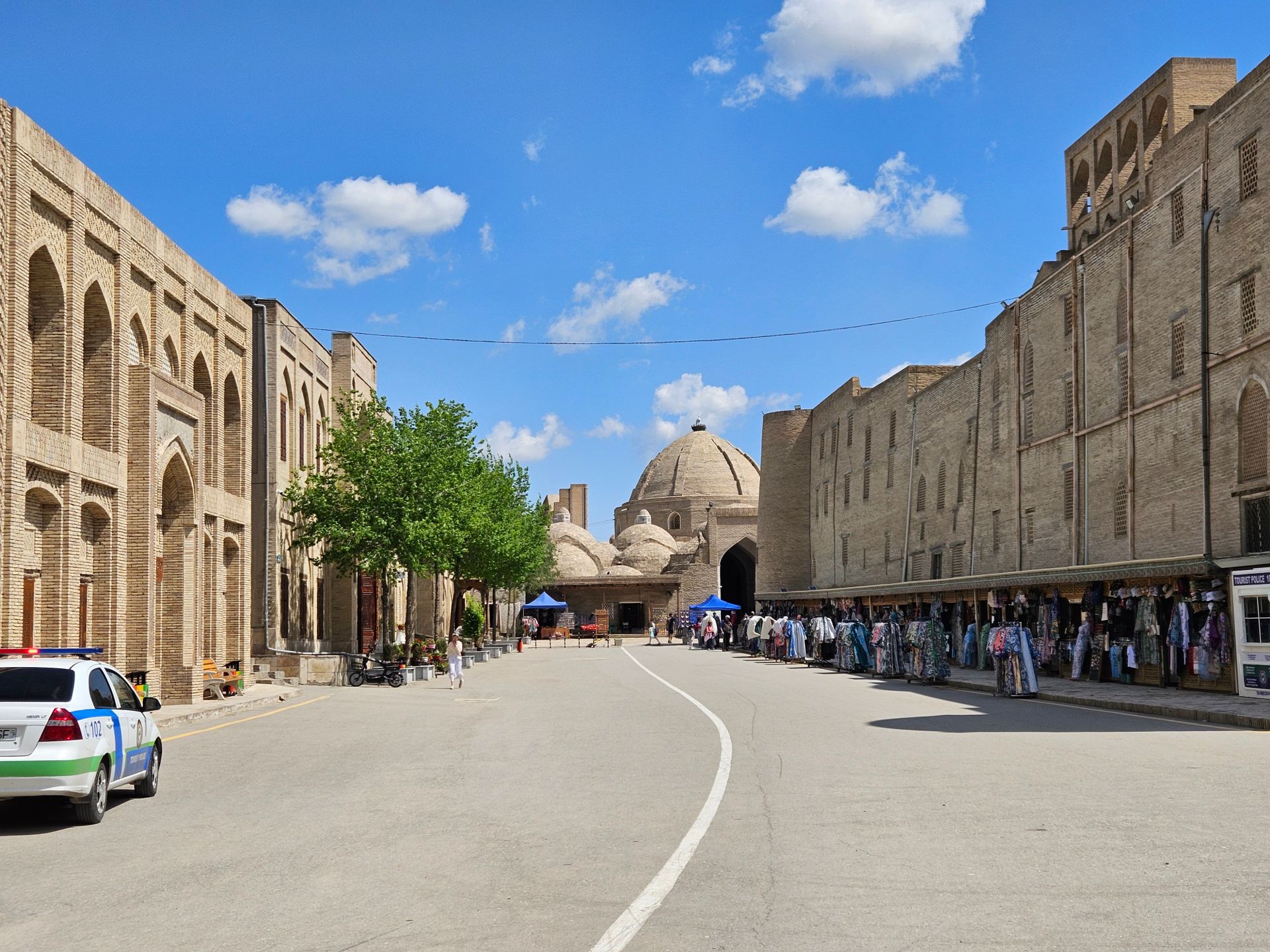
Afternoons bring craft encounters — a visit to a master puppeteer’s workshop tucked into the old quarters, and, on the recommended detour, a traditional blacksmith’s shop where knives and scissors are still hammered out of raw metal. Evenings wind down beneath the domed trading arcades of Toqi Zargaron and Toqi Sarrofon.
A short excursion outside the city center leads to Sitorai-Mokhi-Khosa, the summer palace of Bukhara’s last ruling emir, where Russian imperial styling meets oriental plasterwork amid grounds patrolled by resident peacocks, and to the distinctive four-towered Chor Minor nearby. Bukhara’s final evening is its most intimate: a private family guest house hosts an interactive Manti-making class, turning dinner into a shared activity rather than a spectator meal.
Gijduvan, Mitan, and the Road to Samarkand
The sixth day is built around encounters rather than monuments. Leaving Bukhara, the route passes through Gijduvan, home to a UNESCO-recognized ceramics studio where regional pottery techniques — largely unchanged for generations — can be observed up close, with an optional hands-on class for those who want to try the wheel themselves. From there, the road continues to Mitan, a rural village that functions as a flagship community tourism project in the region.
Here the welcome comes from local elders rather than tour guides, and lunch is a home-cooked, organic meal built around regional bichak pastries — a chance to experience Uzbek hospitality away from the more visited city centers before the day ends with arrival in Samarkand.
Samarkand: The Crossroads of Cultures
If any single site defines Uzbekistan in the popular imagination, it is Samarkand’s Registan Square, and the itinerary rightly gives it an unhurried morning. The three monumental madrassahs that frame the square — Ulugbek, Sher-Dor, and Tilla-Kori — are best explored slowly,
with time to step into their inner courtyards away from the crowds gathered out front. Inside Tilla-Kori, it is worth looking straight up: the flat ceiling is painted with gold leaf in a trompe-l’œil pattern so convincing that it appears fully domed. The afternoon continues to the Bibi-Khanym Mosque, once among the largest in the Islamic world, and to the adjoining Siyob Bazaar, where dried fruit and nuts make for an easy, informal tasting stop.
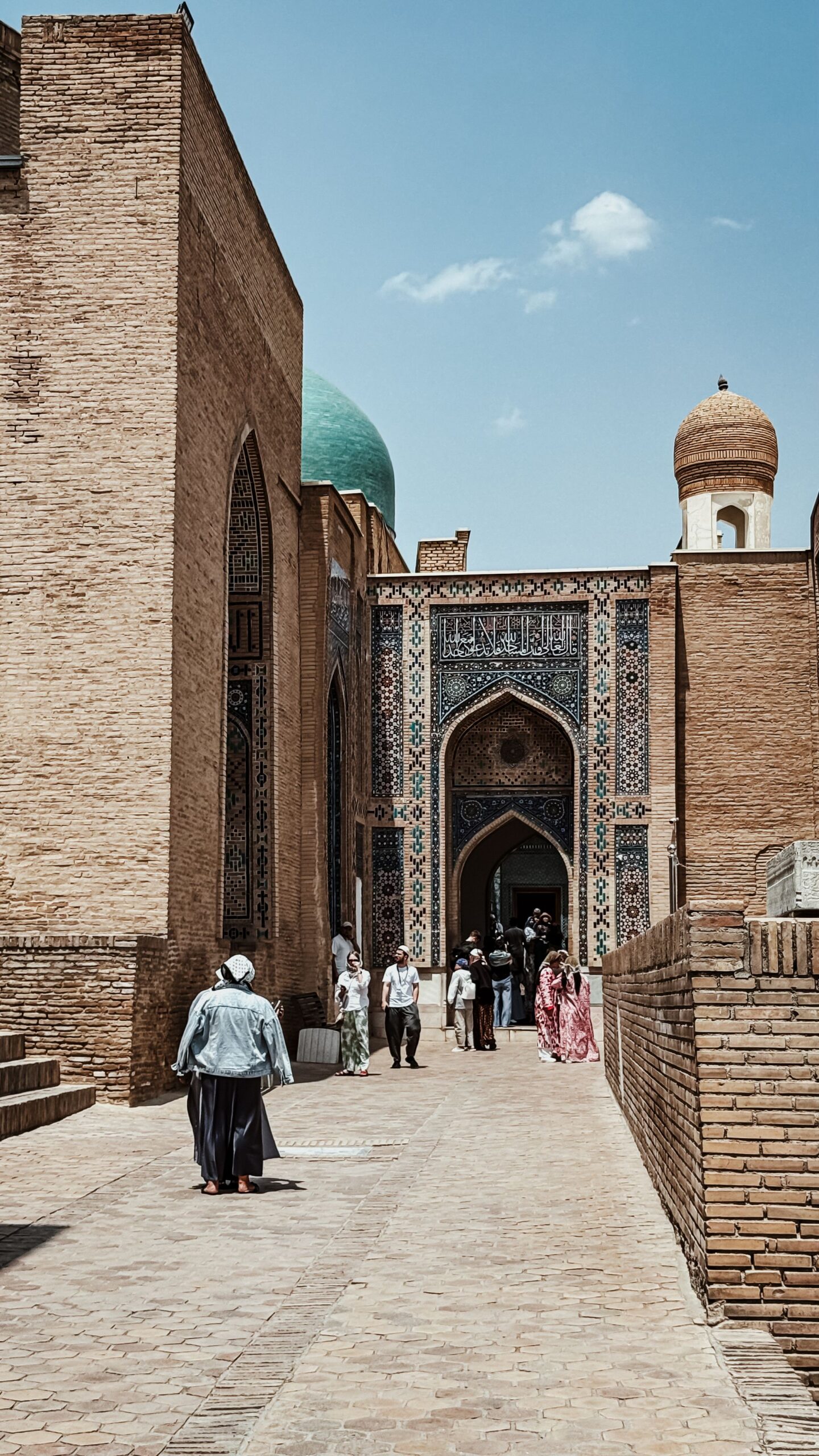
A second day in Samarkand turns toward the city’s scholarly and artisanal history. The Shah-i-Zinda Necropolis, an avenue of blue-tiled mausoleums built up over roughly a thousand years, is paired with a visit to the Ulugbek Observatory, where the remains of a colossal stone sextant recall the 15th-century astronomer-king who built one of the era’s most advanced instruments for tracking the stars
A short visit to the Afrasiyab Museum rounds out the morning before the family heads to Konigil village, where the Meros paper mill still uses a riverside waterwheel to turn mulberry bark into silk paper by hand — an activity where children can genuinely help, stripping bark and polishing finished sheets with smooth agate stones along a quiet riverbank. The day, and Samarkand’s leg of the trip, ends with a transfer to the station for the Afrosiyob high-speed train to Tashkent.
Tashkent: Between Tradition and the Present
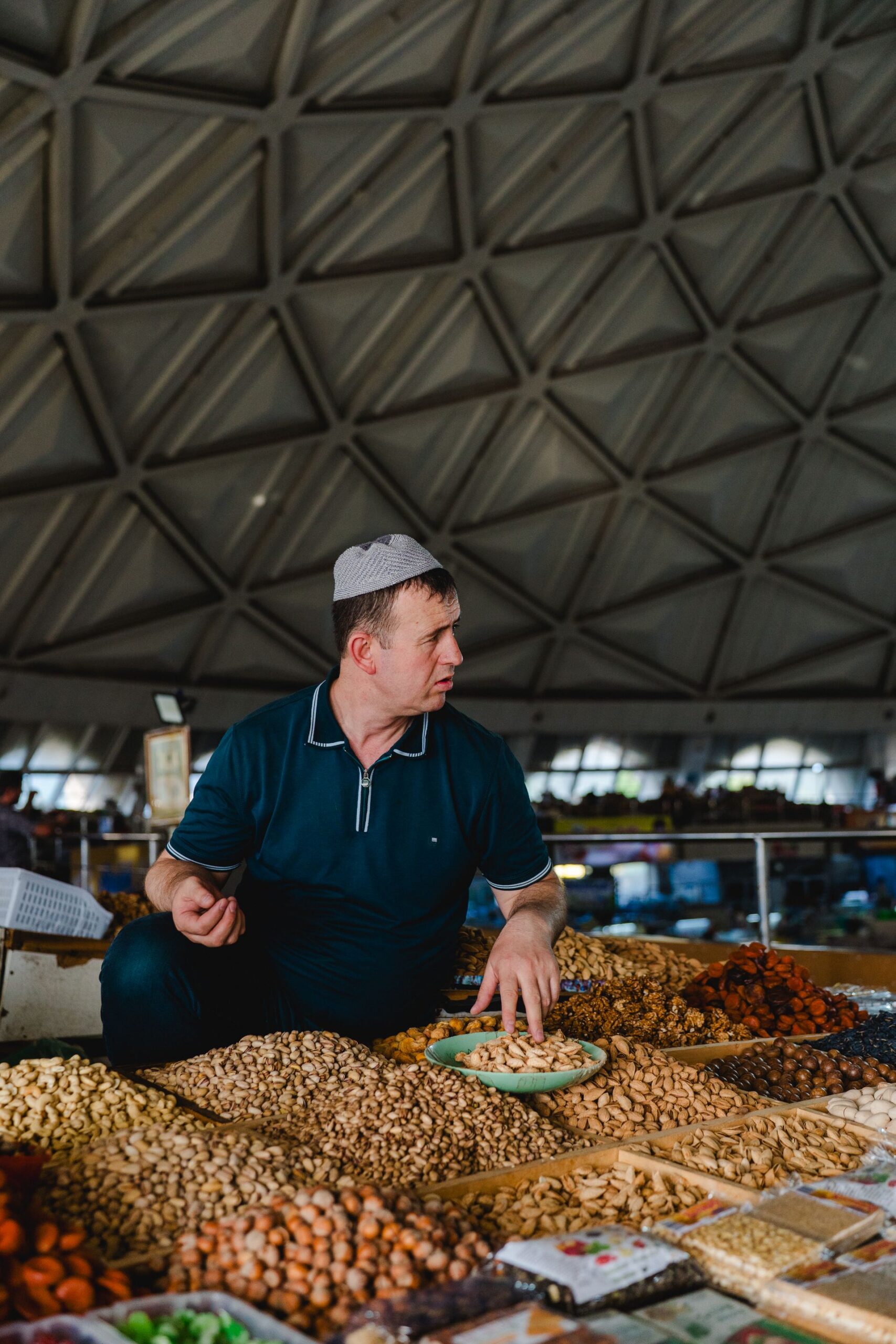
Tashkent closes out the itinerary with a deliberately varied rhythm, mixing spiritual history, whimsical family stops, and a mountain excursion. The Khast Imam Complex, the city’s historic spiritual center, houses the museum library that once held the world’s oldest surviving Quran, the Uthman Quran, now displayed at the nearby Center of Islamic Civilization. From there, Chorsu Bazaar offers a lively contrast — its vast blue dome sheltering stalls of fruit, raisins, and artisan rows where craftsmen still carve traditional wooden toys and cradles by hand.
For a lighter, distinctly family-oriented stop, the itinerary includes the Pumpkin House Museum, a private courtyard filled with well over a thousand hand-painted decorative pumpkins, complete with a puppet show and an optional painting class for children. The day closes underground and above it in quick succession: a ride on the Tashkent Metro to see the space-themed Kosmonavtlar Station, followed by a walk around Amir Timur Square.
The trip’s penultimate day trades the city for the mountains. A roughly ninety-minute drive brings the family into the Chatkal range and the Chimgan hills, where a chairlift climbs to an observation deck with sweeping views toward the snow-capped Tian Shan peaks.
A gentle alpine walk and a stop at the turquoise waters of the Charvak Reservoir make for an easy, scenic contrast to the desert cities that came before, and the group returns to Tashkent for a farewell dinner at a national restaurant before the following morning’s departure from Tashkent International Airport
A Journey Shaped by Contrast
What makes this itinerary work as a family trip is less any single site than the rhythm running underneath it: walled cities followed by open desert, monumental architecture followed by hands-on workshops, guided history followed by afternoons with nothing scheduled at all.
Uzbekistan’s great monuments — the domes, minarets, and madrassahs — are given their due, but so is the village lunch in Mitan, the puppet workshop in Bukhara, and the paper mill on the riverbank in Konigil, the kind of stops that tend to stay with children long after the monuments blur together.
By the time the family boards its departure flight from Tashkent, the eleven days will have covered not just four cities but four distinct versions of Uzbekistan — fortress, holy city, crossroads, and capital — each experienced at a pace unhurried enough for a family to actually absorb it.
SAMARKAND
“We travel not for trafficking alone; by hotter winds our fiery hearts are fanned… We take the Golden Road to Samarkand.”
BUKHARA
“The almond groves of Samarcand, Bokhara, where red lilies blow…”

UZBEKISTAN
“Remarkably undersold as a stunningly attractive and safe destination.”